Social Media Sales Funnel for Your Restaurant
Most restaurants today are active on social media.
They post regularly.
They get likes.
Some posts even perform well.
But when it comes to sales, something doesn’t add up.
Because engagement alone does not generate revenue.
And this is where many restaurants get stuck.
They are visible, but not converting.
The issue is not the content.
It’s what happens after.
Why Social Media Engagement Is Not Translating Into Sales
Customers are already discovering restaurants on platforms like Instagram and TikTok.
They scroll, they stop, they look.
Sometimes they even save the post.
But then what?
In many cases, there is no clear next step.
No urgency.
No direct path to order.
No reason to act now.
So attention fades, and the opportunity is lost.
Social media, by itself, is not a sales channel.
It becomes one only when there is a system behind it.

Step 1: Create Urgency Offers
If you want people to move from scrolling to ordering, you need to give them a reason to act.
The most effective way to do this is through simple, time-based offers.
Not heavy discounts.
Not complicated campaigns.
Just clear, immediate value.
For example:
- “Tonight only — free fries with every burger”
- “Order before kickoff and get a free drink”
- “Weekend combo available until Sunday”
These types of offers create urgency. They give customers a reason to act now instead of later.
This is where engagement starts turning into intent.
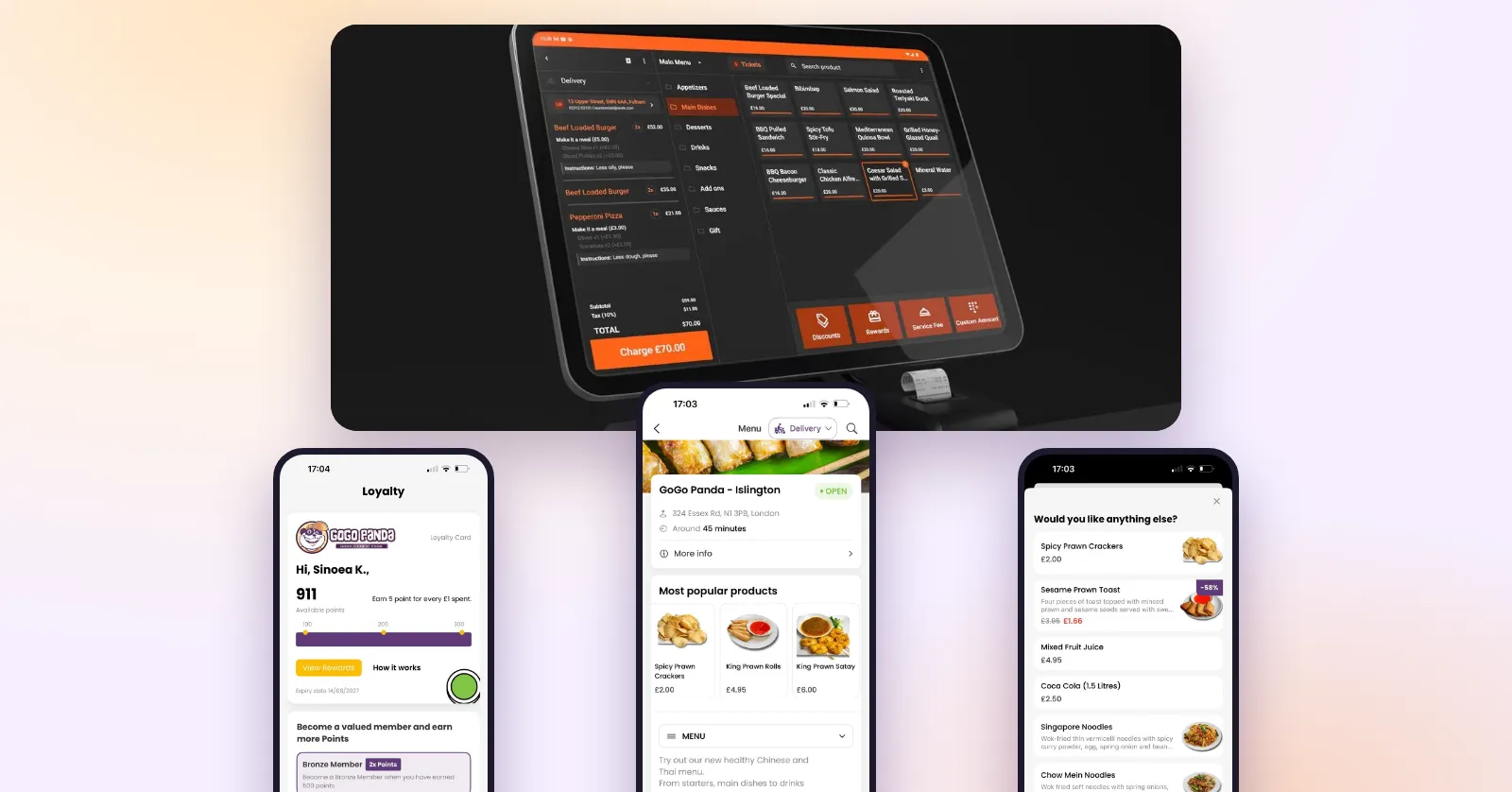
Step 2: Redirect Everything to Your Restaurant App
This is one of the most important shifts.
If your social media is sending customers to third-party platforms, you are losing control.
You are paying commissions.
You are not capturing customer data.
And you are building someone else’s business.
Instead, every post, story, and campaign should lead to your own channel.
Your app.
Your website.
Your brand.
The experience should be simple:
Customer sees content → clicks → orders directly in your app.
No searching. No extra steps.
For example, someone sees your post about a burger combo. They tap your profile, click “Order Now”, and land directly on your menu.
That is where conversion happens.
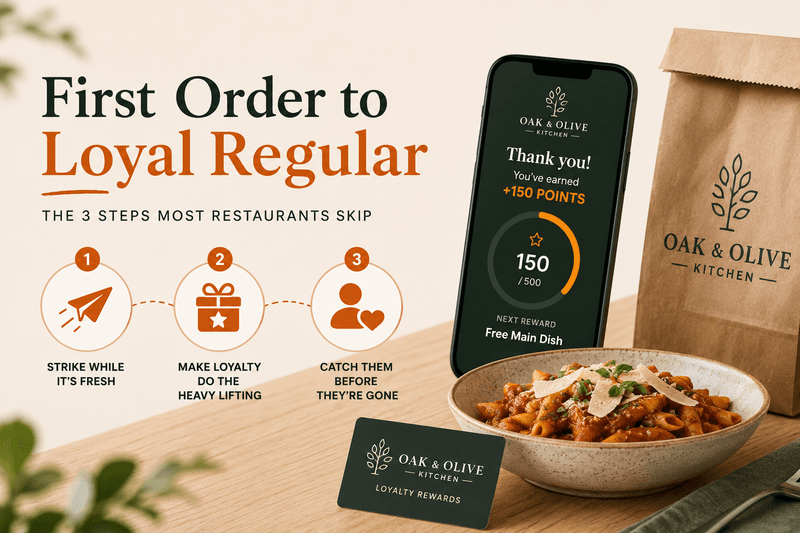
Step 3: Social Media Starting the Loyalty Journey
The first order is important.
But it is not the real goal.
The real value comes from what happens after.
Social media should not just bring customers in.
It should start a relationship.
The idea is simple:
First order → second order → repeat habit
To make this work, you need to guide the customer.
For example:
- First order: “Order through our app and get a free drink”
- Second order: “Thanks for your order — enjoy free delivery next time”
These are low-cost offers, but they create momentum.
They turn a one-time customer into someone who is likely to return.
.png)
Step 4: Keep Engagement After First Order
Many restaurants stop after the first conversion.
But that is where most of the opportunity is.
Customers need reminders.
They need reasons to come back.
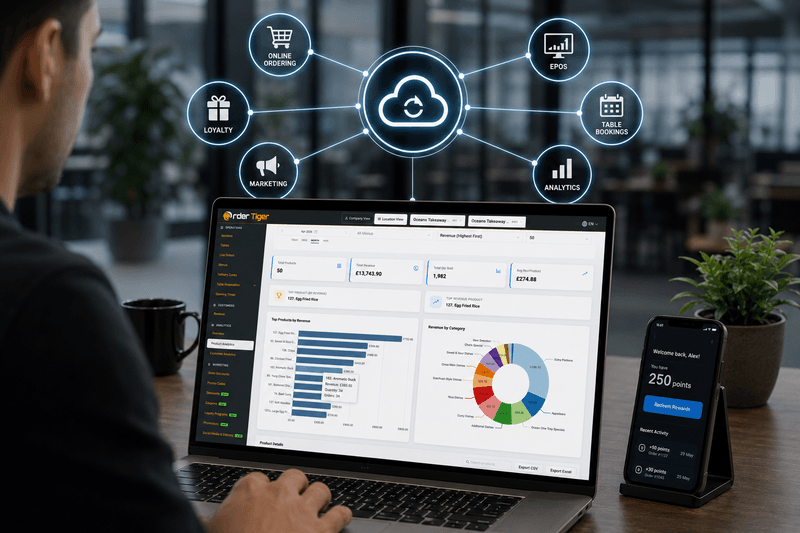
This is where combining social media with direct communication becomes powerful.
You can create simple, ongoing campaigns such as:
- “Double points this weekend”
- “Free delivery on Friday”
- “New menu items available this week”
These messages can be reinforced through:
- push notifications
- email campaigns
- app messages
For example, a customer orders once, then a few days later receives a message:
“Double points today on all orders”
This is how engagement becomes habit.
Step 5: Build a System, Not Content
At this point, the structure becomes clear.
Social media should not be random.
It should follow a simple flow:
- Content creates attention
- Offers create urgency
- Direct ordering captures the sale
- Campaigns bring customers back
This is how you move from posting regularly to generating consistent revenue.
Because without a system, even great content loses impact.
Why This Matters More Than Ever
The restaurant industry has changed.
Customers are constantly online.
They are exposed to more options than ever.
And they make decisions quickly.
At the same time:
- third-party platforms are becoming more expensive
- margins are tighter
- loyalty is harder to build
This makes direct channels essential.
Restaurants that rely only on visibility will struggle.
Restaurants that convert visibility into direct relationships will grow.
Social media is not just a place to post content.
It is the starting point of your sales funnel.
If there is no clear path from content to order, engagement will not turn into revenue.
But when you combine:
- clear offers
- direct ordering
- and structured follow-up
social media becomes more than marketing.
It becomes a system that generates consistent, direct orders.
And in a competitive market, that is what makes the difference.